If you are comparing a cottage near downtown Fairfax with a home tucked into the hills, you are really comparing two different value stories. In Fairfax, price is shaped by more than bedroom count or square footage because geography, access, lot utility, and daily lifestyle all play a big role. If you want to understand what buyers tend to pay for and why, this guide will help you see how cottages and hillside homes are valued in this small, high-demand Marin market. Let’s dive in.
Fairfax value starts with location
Fairfax is a compact town with a distinct village feel, and that matters when you look at home values. The Town’s planning documents describe a mixed-use downtown core, distinct neighborhoods, and large surrounding open space, which helps explain why buyers often choose between convenience and seclusion rather than simply shopping by size alone.
The same local documents also show why site conditions matter here more than they might in a flatter suburb. Fairfax has relatively few vacant lots, and the town notes flood, wildfire, landslide, and liquefaction risk in different areas. That means value is often tied to how a property sits on its lot, how usable the land is, and how easy the home is to live in day to day.
Recent market snapshots also point to a thin and expensive market. Depending on the source, Fairfax had an average home value around $1.24 million, a median sale price around $1.612 million, or a median listing price around $1.299 million in spring 2026, with low active inventory and fast days on market. The exact figures vary by platform and methodology, but the broader pattern is clear: supply is limited, and well-matched homes can attract strong attention.
Why Fairfax cottages hold value
In-town cottages and bungalow-scale homes usually win buyers over with convenience. Many of these homes are close to downtown, local services, and community life, which creates value that is not always captured by square footage alone.
Recent listings in Fairfax show the pattern. A 1920s cottage on Mono Avenue was marketed as being in the heart of downtown with a private yard, while cottage-style homes on Ridge Road and Redwood Road were positioned as close to town, trailheads, and open space. These examples suggest that buyers often pay for an easier everyday routine as much as for the home itself.
Walkability adds daily value
Fairfax has more than 100 historic pedestrian rights-of-way, according to the town’s trail map. Those routes connect neighborhoods, downtown, and open space, which supports the idea that being able to walk around town is a real part of the value equation.
For many buyers, that convenience is practical and emotional at the same time. A home that lets you get to shops, restaurants, services, and trails with less driving can feel easier to own and easier to enjoy. In a small town like Fairfax, that kind of access tends to stay relevant over time.
Smaller lots can still compete
Downtown and near-downtown cottages in the examples from the research report sit on lots around 4,356 to 5,501 square feet. That is not oversized by Marin standards, but these homes are usually not competing on land alone.
Instead, they tend to compete on efficient use of space, charm, and access. If the yard feels private and usable, and the location supports daily convenience, a smaller in-town lot can still be very appealing to buyers who prioritize simplicity and connection to town life.
Parking and ease matter too
Fairfax is actively studying parking availability in the town center, and a local walk audit focused on key downtown routes and destinations. That tells you something important: convenience is not just about distance on a map. It is also about how easy the town is to navigate on foot and by car.
For an in-town home, easy parking, manageable access, and a straightforward walk to downtown features can all support value. These are not flashy details, but they often influence how a property feels in real life.
Why hillside homes command premiums
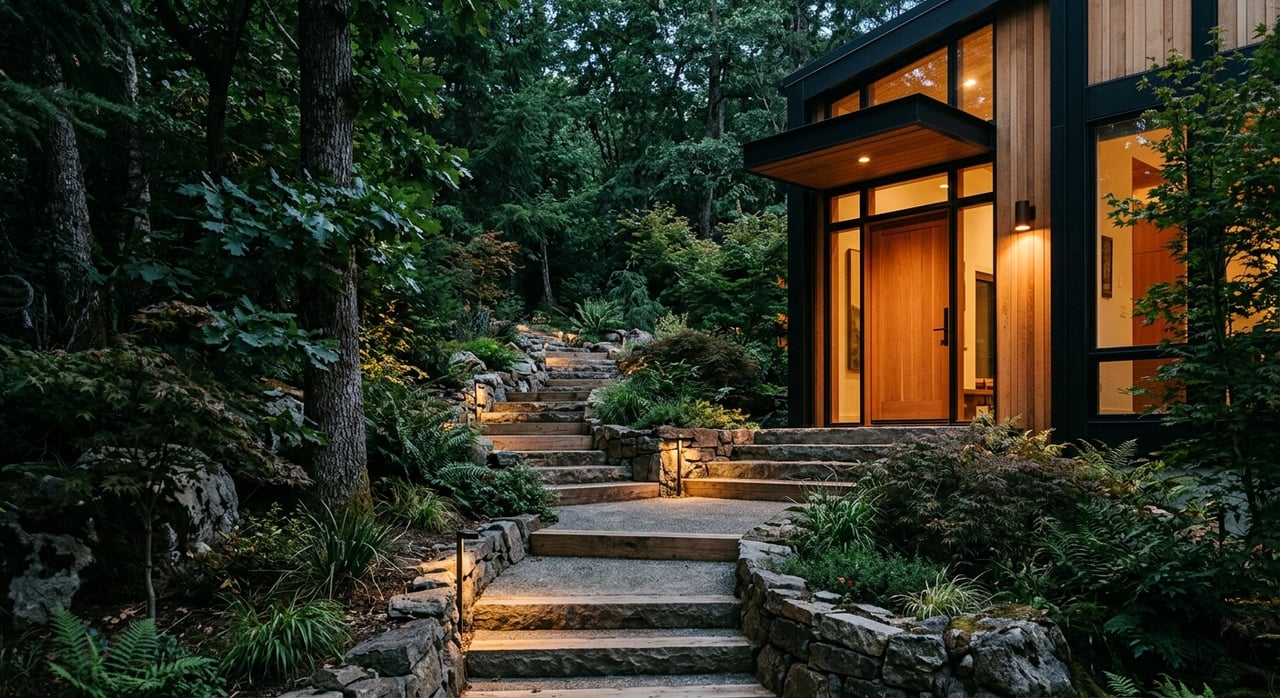
Hillside, ridge, and canyon homes in Fairfax often appeal to a different kind of buyer. These properties are usually valued for privacy, views, outdoor setting, and closer connection to trail systems or open space.
The listing examples in the research report make that clear. Homes on Hillside Drive emphasized privacy, panoramic views, pools, expansive decks, and larger lots, while a Canyon Road property highlighted a flat lot with room for expansion. In this part of the market, buyers are often paying for the setting as much as for the structure.
Privacy and views can lift price
A hillside home can feel more removed from the activity of town, even when it is still relatively close to downtown Fairfax. That sense of separation, combined with broad view corridors or a wooded setting, can create a premium when the property offers a strong indoor-outdoor experience.
For many Marin buyers, that privacy is a major lifestyle draw. If a home opens to decks, captures natural scenery, or sits near open space, it may stand out in ways that are hard to duplicate in flatter, more in-town locations.
Lot size is not the whole story
Hillside lots in the research examples range from about 5,349 square feet to 13,100 square feet and beyond. On paper, that can make a hillside property look like the obvious winner on land value, but in Fairfax, raw lot size does not tell the whole story.
What matters is how much of that land is truly usable. A larger parcel may offer more flexibility for outdoor living, gardening, or future changes, but slope, access, and layout can affect how functional that lot feels. In other words, a big lot is only as valuable as its utility.
Site complexity can affect value
Fairfax’s Housing Element and hill area standards make it clear that hillside properties come with added considerations. The town applies standards related to fire management, grading, retaining structures, vegetation preservation, and erosion control in hill areas.
That does not make hillside homes less desirable. It simply means buyers and sellers should look carefully at the practical side of ownership. In this segment of the market, value is often tied to how successfully a property balances privacy and scenery with manageable site conditions.
The biggest differences in resale appeal
When you compare cottages and hillside homes in Fairfax, the clearest difference is often the likely buyer. Each property type can perform well, but each attracts buyers with different priorities.
Cottages appeal to convenience buyers
In-town cottages often have broader appeal because the benefits are easy to understand. Walkability, quicker trips to town, easier access, and simpler day-to-day living can attract a wide range of buyers.
That does not guarantee a higher price than a hillside home. It does mean that the resale story may be more straightforward, especially when inventory is low and buyers want something that feels immediately usable and connected.
Hillside homes appeal to lifestyle buyers
Hillside properties can earn strong premiums, but they are often more lifestyle-specific. Buyers who want privacy, views, trail access, and a more secluded setting may compete aggressively for the right property, but that audience can be narrower.
The research report supports this framing by pointing to listing language and local site constraints. In practice, that means a hillside home may shine brightest when its view, lot utility, and condition line up clearly with what that buyer group wants.
What really drives value in Fairfax
The cleanest way to understand Fairfax is this: cottages tend to price around ease, walkability, and village convenience, while hillside homes tend to price around privacy, views, and land feel. Neither is automatically better. The stronger value usually comes from how closely the home matches the lifestyle a buyer wants.
For sellers, that means positioning matters. A cottage should be presented around access, comfort, and efficient living, while a hillside home should be evaluated through the lens of setting, outdoor experience, and usable land. For buyers, it helps to be honest about what you will value most after the move, not just on showing day.
In a small market like Fairfax, where inventory is limited and monthly numbers can be noisy, broad averages only tell part of the story. The details that often move value are local and specific: walk routes, lot shape, privacy, parking, topography, and how the home lives on a daily basis.
If you are weighing a move in Fairfax or trying to understand how your property fits into the market, working with someone who can read both the lifestyle and the land can make a real difference. For tailored guidance on buying or selling in Marin, connect with Nick Svenson.
FAQs
What gives in-town cottages value in Fairfax?
- In-town cottages in Fairfax often hold value because buyers are paying for walkability, easier access to downtown, proximity to services and trails, and a simpler day-to-day lifestyle.
What gives hillside homes value in Fairfax?
- Hillside homes in Fairfax often command premiums for privacy, views, trail access, larger-feeling land, and a more secluded setting near open space.
Are bigger lots always worth more in Fairfax?
- No. In Fairfax, lot value depends heavily on usability, topography, access, and local hill area standards, not just the total square footage on paper.
Which homes may have broader resale appeal in Fairfax?
- In-town cottages may appeal to a broader buyer pool because convenience and walkability are easy for many buyers to value, while hillside homes can be more lifestyle-specific.
Why do site conditions matter so much in Fairfax real estate?
- Fairfax planning documents note limited vacant land and risks such as flood, wildfire, landslide, and liquefaction, so a home’s setting and lot conditions can play a major role in value and ownership experience.
Is Fairfax a competitive market for both cottages and hillside homes?
- Yes. The research report shows limited inventory and high prices, which suggests that both property types can attract strong interest when they align with what buyers are looking for.