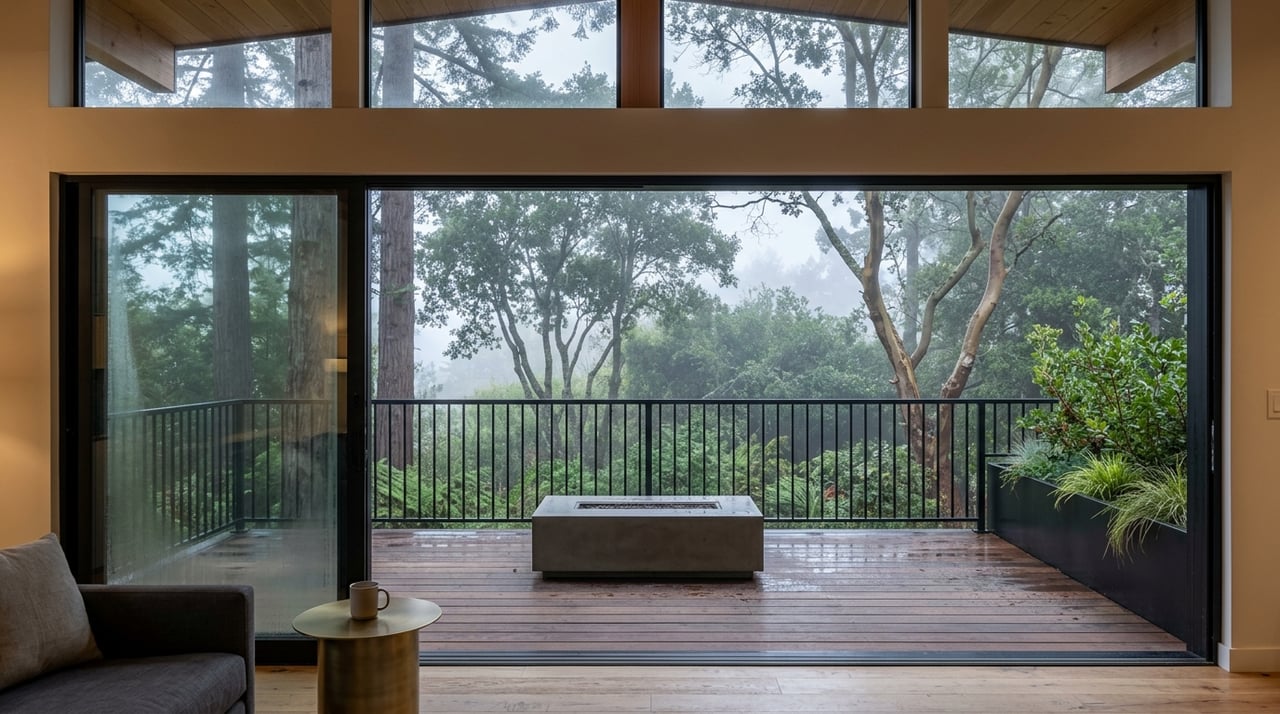
If you have ever toured two homes in Mill Valley on the same day and wondered why one felt bright and warm while the other felt cool and shaded, you are not imagining it. In this part of Marin, weather and light can change quickly from one block to the next because the landscape changes so much within a small area. Understanding those microclimates can help you read listings more clearly, narrow your search faster, and choose a home that truly fits how you want to live. Let’s dive in.
Why Mill Valley Feels Different Block to Block
Mill Valley is shaped by more than just a ZIP code. The city sits between upper Richardson Bay and the southeast face of Mount Tamalpais, with a branched watershed, major ridgelines, marshlands, ravines, wooded slopes, and dry ridges all within the same local landscape.
That mix helps explain why one home can get broad sunlight while another nearby sits under tree cover or canyon shade for much of the day. The city’s Natural Environment plan describes 13 vegetative communities and a sharp contrast between flat bay-edge land and steep, rugged terrain.
Regional climate patterns add another layer. Marin County notes that the west and south parts of the county tend to get cooler marine air and more fog, while the east side is generally warmer and less foggy. Because Mill Valley sits on the marine-influenced side of Marin, that cooler and foggier pattern is especially relevant during your home search.
What Mill Valley’s Climate Looks Like
The broader weather pattern in this area is mild, with wet winters and dry summers. Nearby NOAA normals at Kentfield show average January highs of 56.6°F and lows of 41.9°F, while August averages 83.0°F for highs and 53.6°F for lows.
Local climatology also shows a strong winter-rain and summer-dry pattern. Mill Valley records roughly 35 inches of rain annually, with about 6.70 inches in January and just 0.01 inches in July.
Those numbers give you a useful baseline, but they do not tell the whole story of daily living. In Mill Valley, topography, orientation, and tree cover often shape how warm, bright, or damp a particular property feels.
How Slope and Exposure Shape Daily Living
Sunny Slopes and Ridgelines
In the Northern Hemisphere, south-facing slopes generally get more direct sun. West-facing slopes also tend to dry out more later in the day.
In Mill Valley, that matters because exposed lots on sunnier slopes or ridgelines often feel brighter and drier after fog or rain. These settings can also make decks, patios, and other outdoor areas feel more usable across the day.
The city notes that major ridgelines still have relatively few homes and can open broad views toward San Francisco. If a listing highlights a “view lot,” “southern exposure,” or “sunny” setting, that often points to openness, aspect, and fewer natural obstructions to light.
Canyon and Redwood Settings
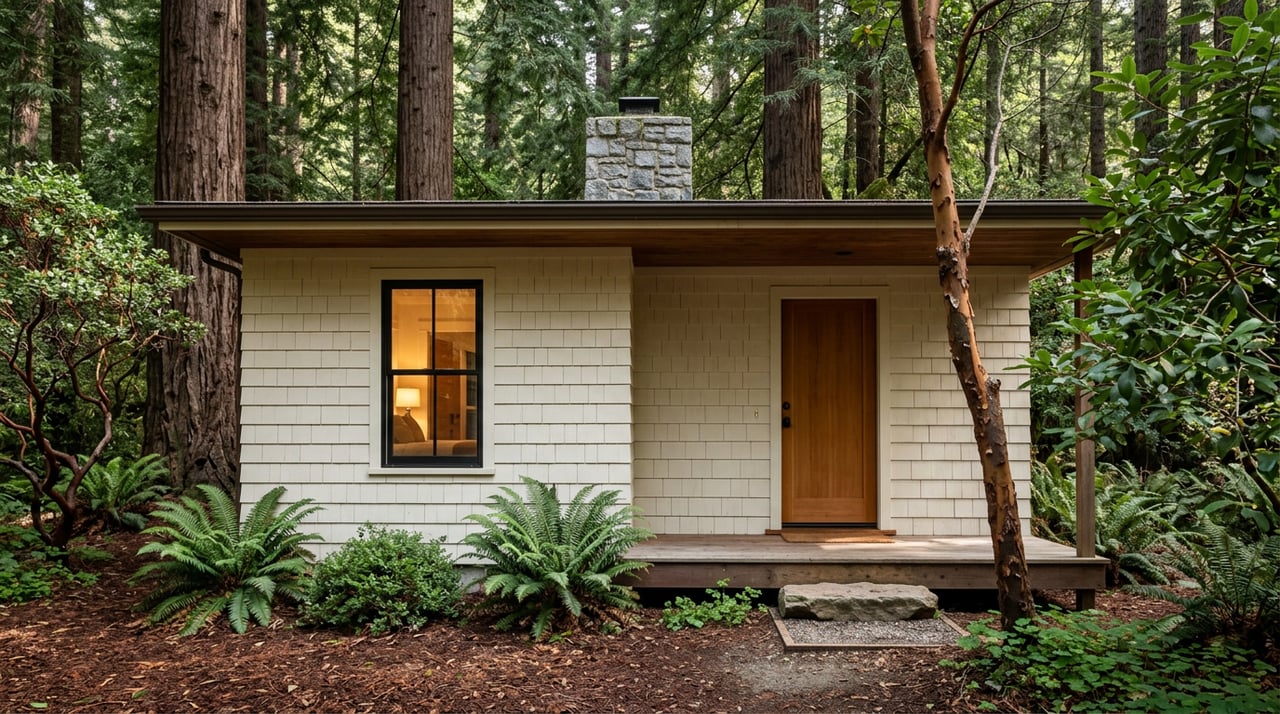
Mill Valley also includes deep redwood ravines, creek corridors, and wooded slopes. Homes in these settings often feel cooler, shadier, and more enclosed by nature.
That can be a major draw if you love privacy, filtered light, and a tucked-away feel. It can also mean less direct sun, more lingering moisture after rain, and a different indoor-outdoor experience than you would get on a more exposed hillside.
When a listing uses words like “wooded,” “canyon,” or “private,” it often reflects those conditions. In practical terms, you may be looking at heavier tree canopy, terrain that blocks sunlight, or a home that stays cool longer into the day.
Bay-Adjacent Lowlands
Near Richardson Bay, the landscape opens up into flatter marshlands, mudflats, bayfront parklands, and water-oriented terrain. Compared with canyon or ridge locations, these lower areas often feel more open to the sky and more connected to bay breezes.
That does not mean every bay-adjacent property feels the same. Still, the setting can feel less enclosed by trees and hillside walls, which can change how light and airflow move across a property.
Why Two Nearby Homes Can Feel So Different
This is one of the biggest surprises for buyers moving within Marin or coming from outside the area. Two homes that seem close on a map may live very differently depending on elevation, slope direction, tree cover, and whether the lot sits in a ravine, on a hillside, or near the bay.
One property may catch direct morning or afternoon sun and feel bright most of the day. Another may not fully warm up until later, especially if fog lingers or canyon walls and mature trees limit direct light.
That is why it helps to look beyond photos and square footage. In Mill Valley, the feel of a home is often tied as much to its setting as to its floor plan.
How Home Style Connects to Setting
Mill Valley’s housing stock has depth and variety. The city’s 2021 Historic Resources Inventory surveyed 176 potentially historic properties, and about 160 of those were built before 1930.
That means your search is not centered around one uniform subdivision pattern. Instead, you are likely to see a mix of older homes, midcentury properties, and later residences spread across very different terrain.
Older Homes in Historic Settings
Mill Valley’s earlier architectural styles include First Bay Tradition/Shingle Style and Craftsman homes. According to the city’s Historic Context Statement, First Bay Tradition buildings often feature wood shingles, steep roofs, large porches, and brick chimneys.
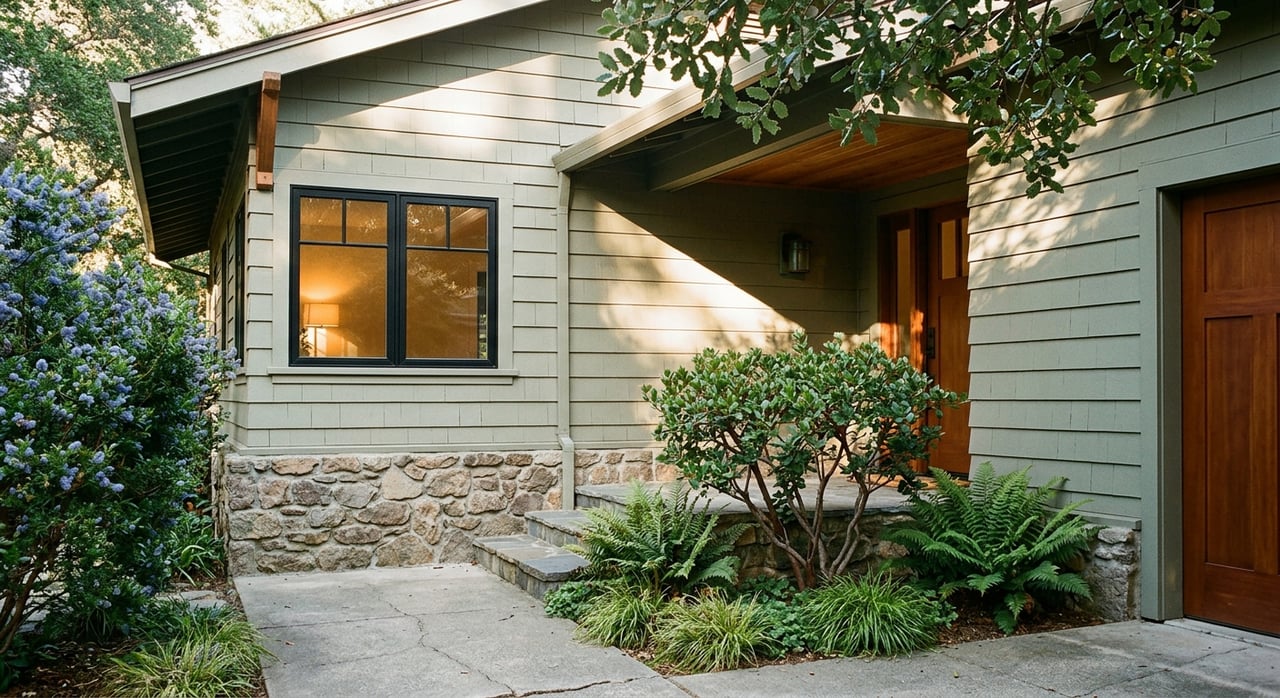
Craftsman homes typically include simple massing, gable roofs, exposed rafters, battered porch columns, and wood siding. In many cases, these homes feel especially consistent with wooded streets, older neighborhood fabric, and sheltered settings.
Revival and Postwar Homes
Homes from the 1930s and 1940s may include Spanish Colonial Revival and Tudor Revival styles. The city describes Spanish Colonial Revival homes with stucco walls, clay tile roofs, and arched openings, while Tudor Revival homes often include steep gables, stucco or half-timbered surfaces, and masonry accents.
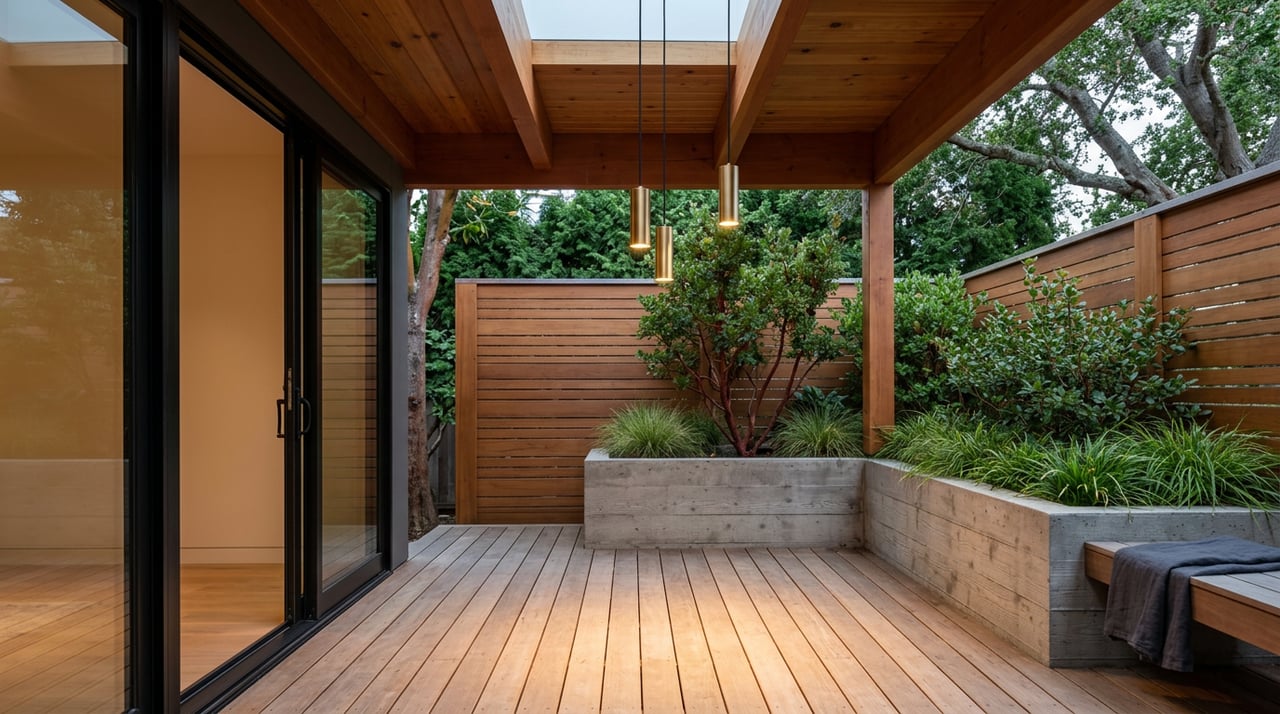
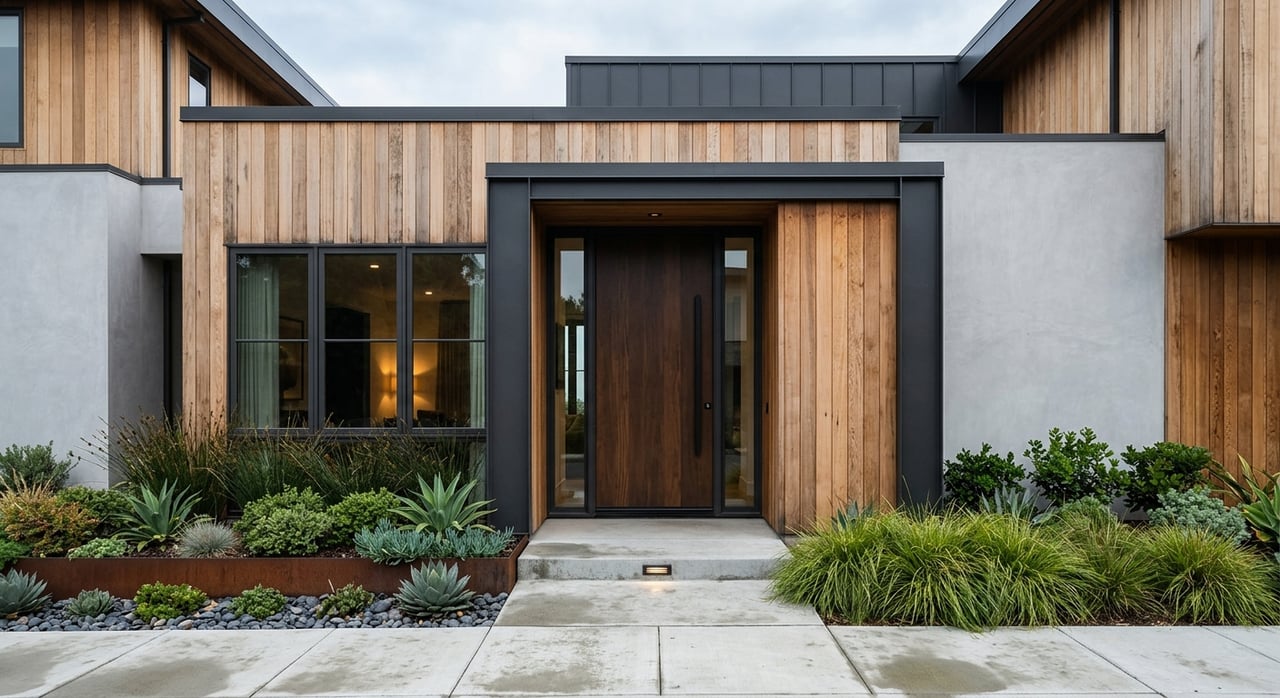
Postwar Mill Valley expands into Minimal Traditional, California Ranch, Midcentury Modern, and Second Bay Tradition homes. Midcentury Modern homes often use large expanses of glass and strong indoor-outdoor connections, while California Ranch homes typically emphasize horizontal massing, one-story living, and integrated garages.
From a buyer’s perspective, that variety matters. Ranch and Midcentury homes are often especially appealing when a property is positioned to capture light, outlook, and outdoor living, while older shingle and Craftsman homes can feel naturally suited to wooded and historic surroundings.
How to Read Listing Language More Carefully
In Mill Valley, listing language often gives you clues about the microclimate of a property. The key is knowing what those clues usually point to.
If you see terms like sunny, southern exposure, or view lot, the home may sit on a brighter aspect with more open sky. If you see wooded, canyon, or private, the property may have more shade, tree canopy, or terrain-related screening.
These words are not guarantees, and every lot is site-specific. Still, they can help you ask better questions before you tour or make an offer.
A Smart Buyer Checklist for Mill Valley
When you are comparing homes, keep this short checklist in mind:
- Which direction do the main living spaces face?
- Which direction do the outdoor areas face?
- Is the lot on an exposed slope, in a canyon, or on a flatter bay-adjacent site?
- How much tree cover is there at midday?
- How much shade shows up in the late afternoon?
- Does the home feel bright on a winter morning, or only later after fog clears?
These questions can help you connect a listing’s marketing language to the actual experience of living there. That is especially important in Mill Valley, where two similar homes can feel very different because of their site conditions.
What This Means for Your Home Search
The right home in Mill Valley is not just about price, size, or style. It is also about whether you want morning sun in your kitchen, warmer afternoons on your deck, filtered light through redwoods, or a more open bay-facing feel.
That is where local context matters. A consultative home search should account for how a property lives day to day, not just how it appears online.
If you are searching in Mill Valley or nearby Marin neighborhoods, it helps to evaluate each property through the lens of exposure, terrain, and setting. That can save you time, sharpen your priorities, and help you feel more confident when the right home comes up.
If you want a more grounded read on how a specific Mill Valley property may live across the seasons, Nick Svenson can help you evaluate the setting with a local, practical lens.
FAQs
Where are homes generally sunniest in Mill Valley?
- Homes on more exposed south- or west-facing slopes and ridgelines are generally the sunniest, though trees and local terrain can change that from lot to lot.
Where do homes generally feel coolest or foggiest in Mill Valley?
- Homes in shaded canyon and redwood settings often feel cooler and shadier, and Mill Valley’s marine-influenced location can also bring cool air and fog.
Why can two nearby Mill Valley homes feel so different?
- One home may sit on a bright, open aspect while another is tucked into a moist ravine or under heavier tree cover, which changes light, temperature, and overall feel.
What does “southern exposure” usually mean in a Mill Valley listing?
- It usually points to a home or outdoor area positioned to receive more direct sunlight, which can make the property feel brighter and drier.
What does “wooded” or “private” usually mean in a Mill Valley listing?
- It often suggests more tree canopy, more shade, or terrain that creates a more enclosed setting with filtered light.
How should you evaluate outdoor space when buying in Mill Valley?
- Check when the yard, deck, or patio gets direct sun, how much tree cover affects the space, and whether the area stays cool into the afternoon or summer season.