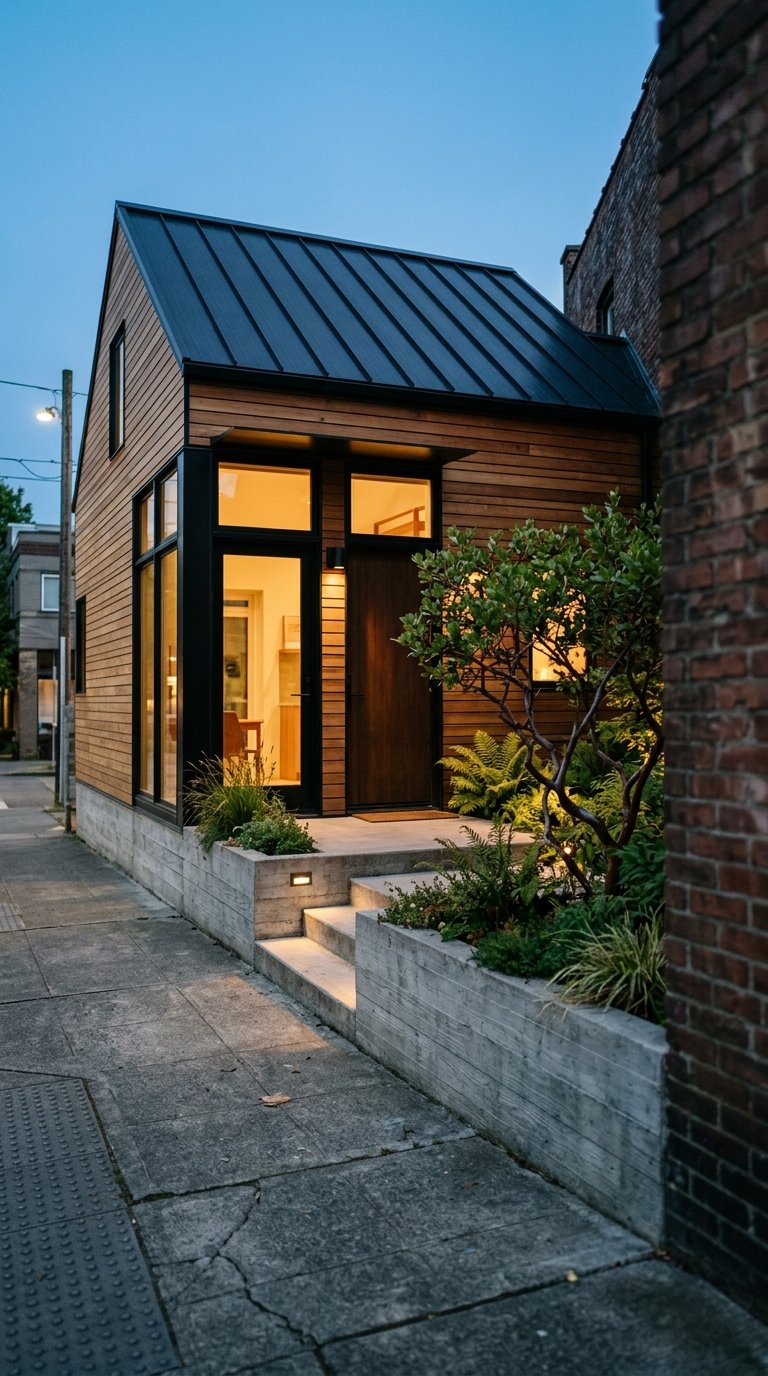
If you love San Anselmo, one of the biggest questions is not whether to buy here, but where you will feel most at home. Some buyers want to walk to coffee, errands, and community events. Others want more privacy, wider views, and quick access to trails. This guide will help you compare hillside living with downtown-adjacent living in San Anselmo so you can narrow your search with more confidence. Let’s dive in.
San Anselmo has two distinct lifestyles
San Anselmo’s planning framework makes the contrast pretty clear. The town describes itself as a small-town, detached single-family residential community with more dense development near its central commercial core. On the flatter valley floor and lower hill slopes, you tend to see more traditional neighborhood patterns, while density drops quickly as you move up into the upper slopes and ridges.
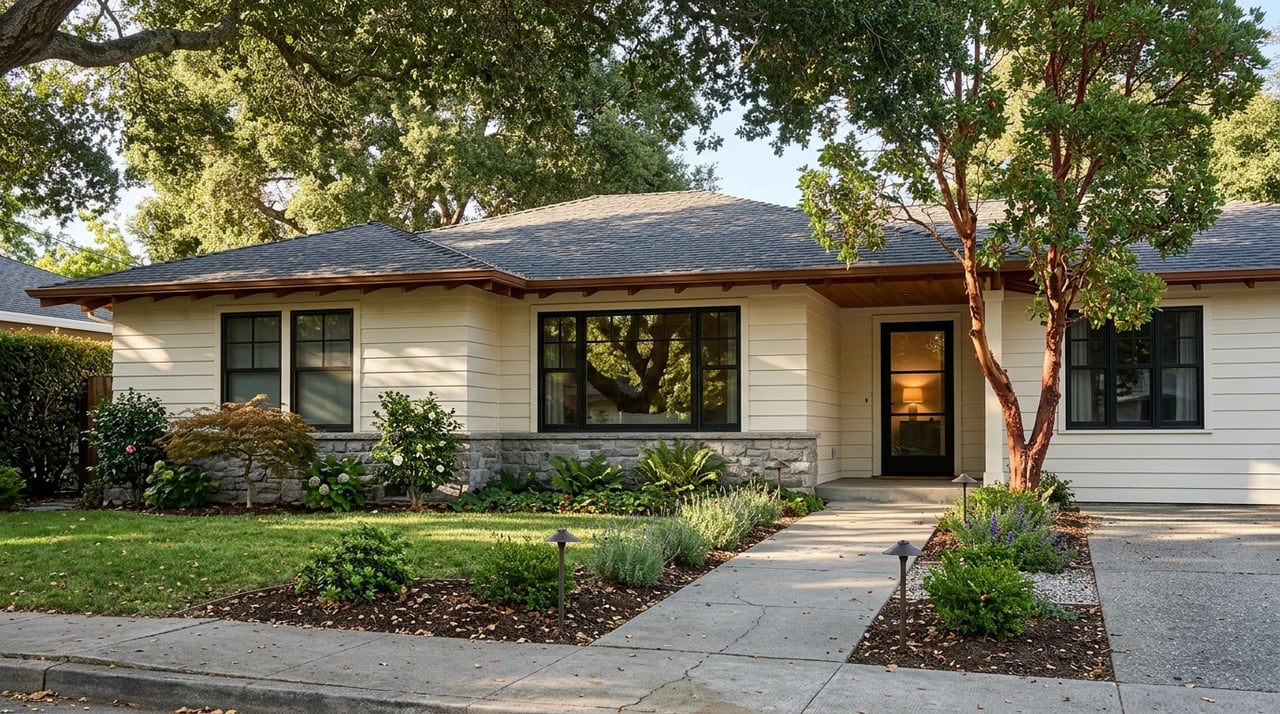
That matters because your day-to-day experience can change a lot depending on where you land. A home near downtown often puts you closer to shops, services, and civic life. A home in the hills usually offers a more landscape-driven setting, with lower density and a different relationship to access, privacy, and outdoor space.
Downtown San Anselmo at a glance
Downtown San Anselmo is the town’s historic commercial center, centered along San Anselmo Avenue and Sir Francis Drake Boulevard between the Hub and Tunstead Avenue. The town describes this area as pedestrian-oriented, with storefront frontage and civic anchors like Town Hall and the public library.
If you want to be close to the rhythm of daily town life, downtown is the clearest fit. The area includes a mix of locally owned retail shops, restaurants, services, and offices. It is also where many community events and gatherings take place, which gives nearby living a more connected, central feel.
Why buyers choose downtown
For many buyers, convenience is the biggest draw. If you want easier errands, simpler access to dining and services, and a more walkable routine, downtown stands out.
Transit access is another plus. Marin Transit routes 23 and 228 serve the San Anselmo corridor and connect to the San Rafael Transit Center. Red Hill Avenue also functions as an arterial connection between the Hub and San Rafael, which can make day-to-day travel more straightforward than it is from some hillside locations.
Tradeoffs to expect downtown
Downtown convenience usually comes with some compromises. The town notes that parking in the central commercial area is generally on-street or in small lots within walking distance, so parking can feel tighter than in more residential hillside settings.
The town also flags periodic flooding in the San Anselmo Avenue business area. For buyers looking close to the commercial core, that is an important practical factor to understand as you compare locations.
There is also a broader land-use pattern to keep in mind. Near the central core, the town supports a denser mix of development than in the hills, so homes near downtown may offer more compact footprints and smaller outdoor areas than properties on larger hillside parcels.
Hillside living in San Anselmo
If downtown is about convenience, the hills are more about space, separation, and connection to the landscape. San Anselmo’s General Plan treats hillside and ridge areas very differently from the valley floor, with very low-density land intended for detached single-family homes.
In areas above 150 feet elevation, the town applies a special conservation approach because of visibility and development constraints. In those areas, density can be limited to one unit per acre or less, and projects may be reviewed for building location, access, and exterior design.
Why buyers choose the hills
The appeal is easy to understand. Hillside homes often offer more privacy, more separation from neighbors, and a stronger sense of place tied to the natural setting.
For buyers who want views or quick access to open space, the upper elevations can be especially compelling. San Anselmo’s trail network is a real asset, with 37 trails in the town’s Stairs, Lanes, and Trails program. Nearby outdoor destinations include Sorich Ranch Park, which offers hiking trails and views toward Mt. Tamalpais, Bald Hill, and the Seminary, and Faude Park, which offers a wooded setting with panoramic Ross Valley views.
The Memorial Ridge Trail is another draw. It connects Memorial Park and Sorich with about 1.2 miles of walking and roughly 280 feet of elevation gain, giving many hillside buyers a lifestyle that feels closely linked to trails and open-space access.
Tradeoffs to expect in the hills
Hillside living is not just downtown with better views. It often comes with more site-specific complexity.
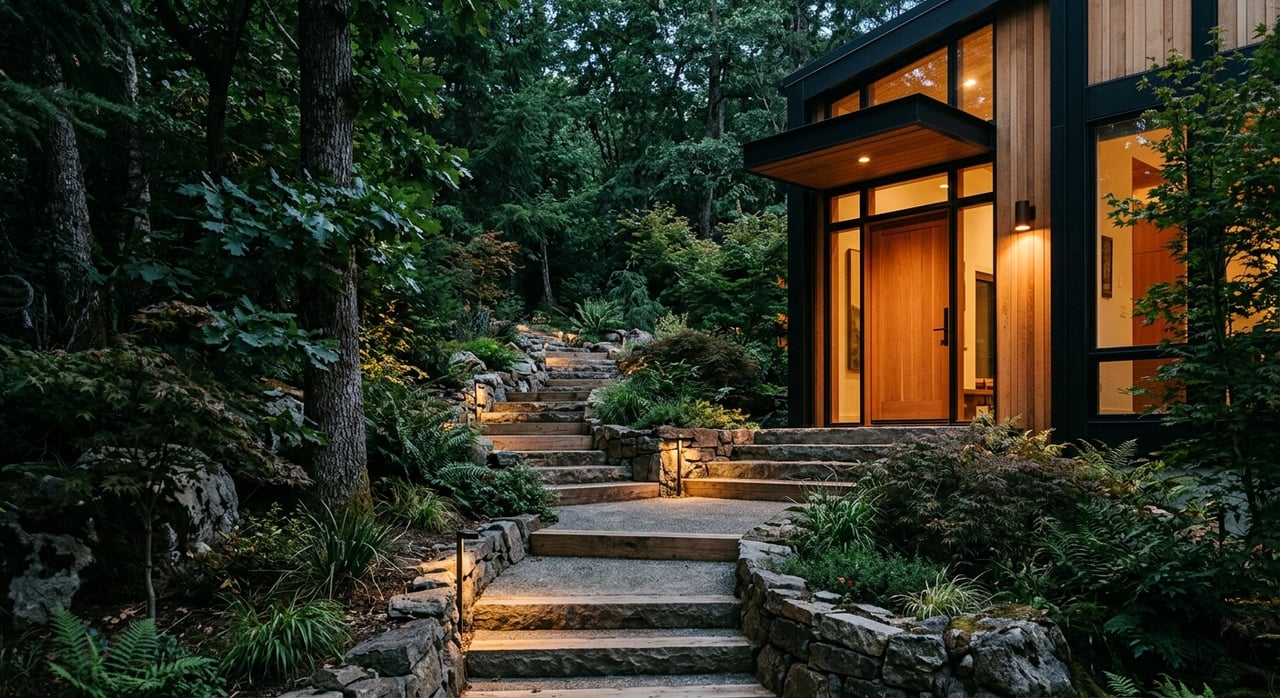
The town says development in these areas must respond to slope, unstable soils, stream courses, and other environmental constraints. That can shape how a lot functions, how outdoor space is used, and what future changes may involve.
Access can also feel different. The General Plan notes that many hill roads are narrow and circuitous, in part because they were improved long ago when homes were not expected to be occupied full time. So while a hillside address may feel peaceful and tucked away, it can also mean a less direct route in and out.
Daily life: hills vs downtown
When buyers get stuck between these two settings, it usually helps to focus on how you want your week to feel, not just how you want your home to look.
If your ideal routine includes walking to shops, grabbing a meal nearby, running errands without much planning, and staying close to community activity, downtown has a strong advantage. If your ideal routine includes quieter surroundings, a more tucked-away setting, and easier access to trails and views, the hills may be the better match.
Here is a simple side-by-side view:
| Lifestyle factor | Downtown San Anselmo | San Anselmo hills |
|---|---|---|
| Walkability | Strongest option near the commercial core | More limited, depends on road layout |
| Transit access | Better access to corridor routes and San Rafael connections | Usually less direct |
| Privacy | Typically less private | Typically more private |
| Views | More limited in many locations | Often a key advantage |
| Outdoor access | Easier access to town amenities | Easier access to trails and open space |
| Parking | More constrained in central areas | Often less tied to commercial parking conditions |
| Site complexity | Usually more straightforward | Often shaped by slope and access constraints |
How home design can differ
The town’s land-use rules also help explain why the housing stock can feel different between these two settings.
Near downtown, the denser transition around the commercial core often supports more compact homes and smaller outdoor areas. That does not mean every property is small, but it does mean buyers should expect a more urbanized relationship to neighboring homes and nearby activity.
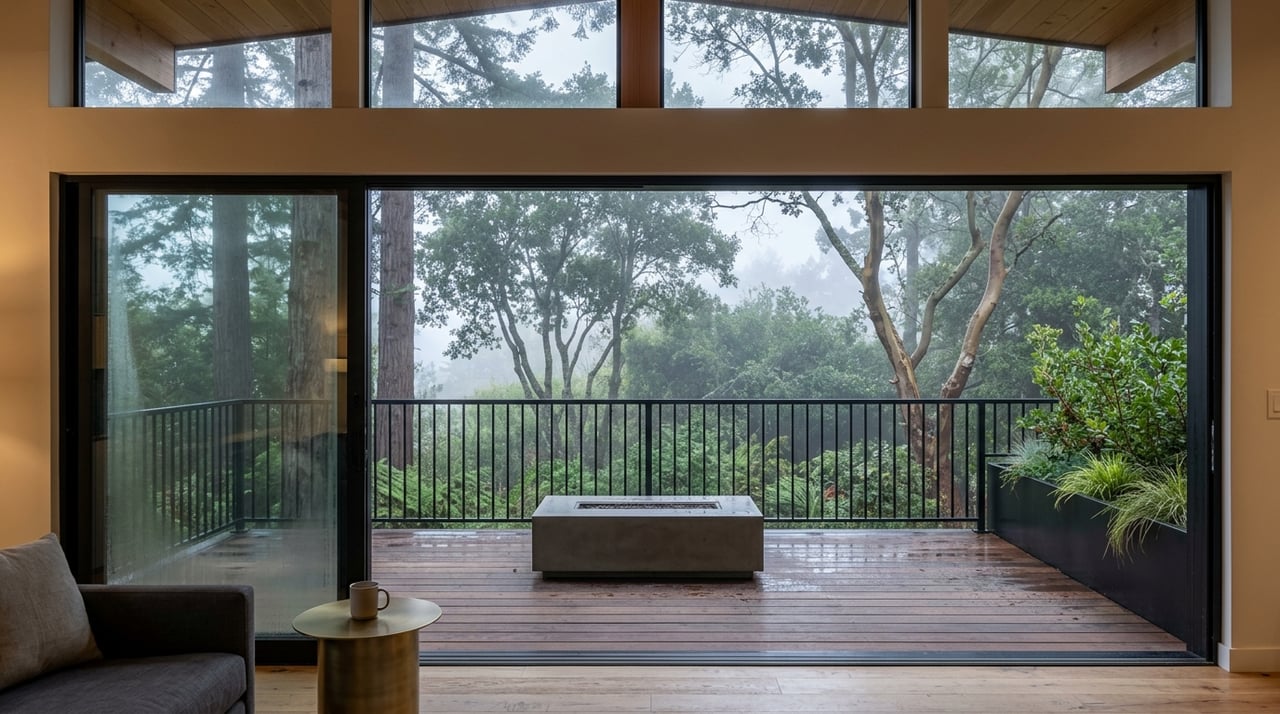
In the hills, homes often respond more directly to topography. As a practical matter, that can mean more vertically layered floor plans, terrain-adapted layouts, decks, and terraces that follow the slope. These are not formal architectural rules, but they are logical outcomes of the town’s low-density hillside framework and slope-sensitive review standards.
Commuting and getting around
San Anselmo does not have freeways or expressways within town limits. According to the General Plan, the town’s arterials carry regional traffic to and from Fairfax, Sleepy Hollow, and central and west Marin.
That is one reason downtown often feels easier for commuting. You are already closer to the main commercial and transit corridor, and the connections to San Rafael are more direct. In the hills, your first few minutes of any drive may involve narrower, more winding neighborhood streets before you reach the main routes.
For some buyers, that difference is minor. For others, especially if you value quick daily access to services or transit, it can be a deciding factor.
Pricing context in San Anselmo
No matter which setting you prefer, you are shopping in a premium Marin market. Recent market snapshots show that clearly, even though the exact figure varies by source and methodology.
Redfin’s March 2026 data shows a median sale price of $1.9 million and a median sale price per square foot of $1.03K. Realtor.com’s March 2026 snapshot shows a median listing price of $1.70 million, a median price per square foot of $863, and a 98% sale-to-list ratio. PropertyShark’s Q4 2025 snapshot shows a median sale price of $1.6 million and $831 per square foot.
The big takeaway is not the exact number. It is that San Anselmo remains a high-value market, and neighborhood lifestyle differences can influence how buyers weigh pricing.
What buyers are really paying for
In practical terms, downtown and hillside homes often command interest for different reasons. Downtown buyers are often prioritizing walkability, access to services, and shorter everyday trips.
Hillside buyers are often prioritizing privacy, views, trail access, and the scarcity that can come with lower-density land. Because the town limits hillside density and treats upper elevations as conservation-sensitive areas, view-oriented parcels can behave like a limited-supply product, even when topography affects how usable the lot feels.
How to choose your ideal home base
If you are torn between the two, it helps to ask a few simple questions:
- Do you want to walk to shops, restaurants, and community events on a regular basis?
- Do you want easier access to transit and the San Rafael corridor?
- Do you value privacy and views more than convenience?
- Do you want trail access close to home?
- Are you comfortable with a property that may have slope-related access or design constraints?
- Would you prefer a more compact in-town setup or a more site-specific hillside home?
There is no universal best answer here. The right fit depends on how you live, how you move through your day, and what kind of setting feels restorative to you.
For some buyers, downtown wins because it makes everyday life easier. For others, the hills win because they offer a stronger sense of retreat. The key is matching the property to your routine, not just the photos.
If you want help comparing San Anselmo hillsides, downtown-adjacent blocks, or nearby alternatives in San Rafael and greater Marin, reach out to Nick Svenson to schedule a 15-minute consultation.
FAQs
Which part of San Anselmo is more walkable for homebuyers?
- Downtown San Anselmo is the more walkable option because the town identifies it as the pedestrian-oriented historic commercial center with shops, services, and community activity.
Which San Anselmo area offers more privacy and views?
- The hillside and ridge areas generally offer more privacy and stronger view potential because they are planned as lower-density residential areas and connect more closely to open-space settings.
Which San Anselmo location is easier for commuting to San Rafael?
- Downtown is usually the easier base because it sits on the main commercial and transit corridor and has more direct access to arterial connections.
What should buyers know about hillside homes in San Anselmo?
- Hillside homes can offer privacy, views, and trail access, but they may also involve narrow roads, sloped lots, and site constraints related to access, soils, streams, or design review.
What should buyers know about downtown-adjacent homes in San Anselmo?
- Downtown-adjacent homes often provide easier access to errands, dining, and community events, but buyers should also expect tighter parking conditions and a more compact setting near the commercial core.
Is San Anselmo considered a premium Marin housing market?
- Yes. Recent market snapshots from multiple sources show San Anselmo remains a high-priced Marin submarket, with median prices ranging roughly from $1.6 million to $1.9 million depending on the dataset and time period.